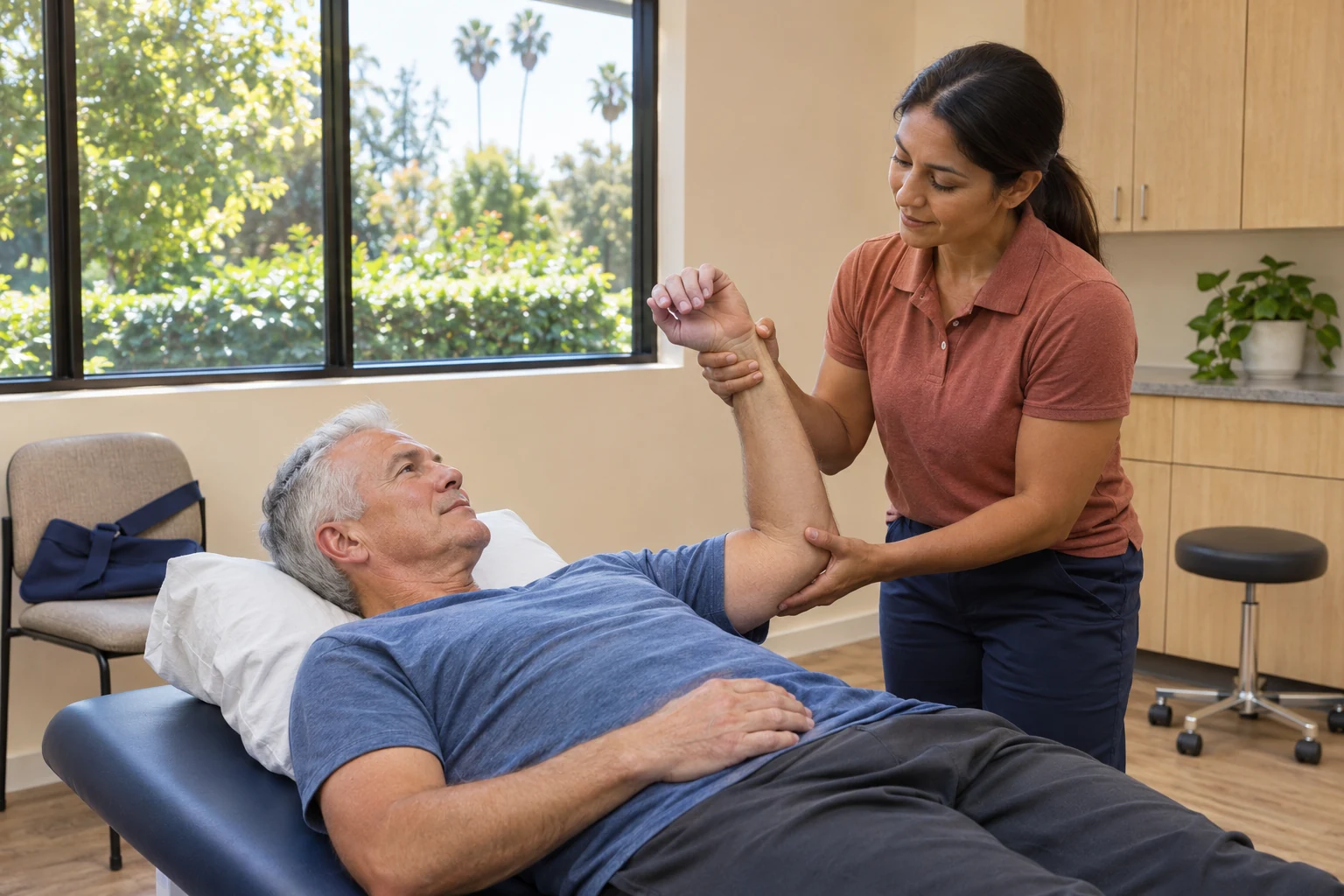
Physical therapy after rotator cuff surgery protects the repaired tendon while gradually restoring shoulder motion, strength, and function. Recovery moves through clear stages, from passive motion in a sling to strengthening and return to full activity, usually over several months. Our post-surgical rehabilitation in Tarzana, CA follows your surgeon's protocol with one-on-one care. Schedule your first session to start recovery on track.
Rotator cuff surgery repairs the tendon, but physical therapy is what gives you your shoulder back. The weeks and months after surgery follow a careful progression: protect the repair, restore motion, rebuild strength, and return to the activities you care about. At Theracare Physical Therapy, our team guides patients through each stage with a plan built around their surgeon's protocol and their personal goals.
This guide explains what the rotator cuff does, when physical therapy starts, and the recovery milestones most patients move through. Your own timeline will depend on the size of the tear, the type of repair, your health, and your surgeon's instructions, so use this as a general map and rely on your care team for specifics. If you have surgery coming up, you can contact our Tarzana clinic in advance to plan your rehabilitation.
What Is the Rotator Cuff?
The rotator cuff is a group of four muscles and their tendons that surround the shoulder joint: the supraspinatus, infraspinatus, teres minor, and subscapularis. Together, they keep the head of the upper arm bone centered in the shoulder socket and help you lift, rotate, and reach. Tears can result from a fall, a lifting injury, or gradual wear over time. When a repair is needed, surgeons reattach the torn tendon to the bone, and a structured post-surgical rehabilitation program protects that repair while it heals.
When Does Physical Therapy Start After Rotator Cuff Surgery?
Physical therapy usually begins within a few days to two weeks after surgery, depending on the procedure and your surgeon's recommendation. Starting on time matters because early, carefully controlled motion helps limit stiffness without stressing the healing tendon. Our physical therapists follow your surgeon's protocol and coordinate with the surgeon so that every step matches what your repair can tolerate.
Many post-surgical patients attend therapy two to three times a week, and shoulder repairs commonly take several months to recover fully. Progress is tracked at every visit, and your plan is adjusted as you improve, an approach that applies across all of our physical therapy services in Tarzana.
Rotator Cuff Surgery Recovery Milestones
The stages below reflect common rotator cuff repair protocols. Exact timing varies from patient to patient, and your surgeon sets your restrictions. Our team uses these milestones to track progress and plan the next step in your shoulder rehabilitation.
Phase 1: Protection and Early Motion (Weeks 0 to 6)
In the first phase, the main goal is to protect the repair, and every step follows the protocol outlined on our post-surgical rehabilitation page. Most patients wear a sling full-time for the first several weeks, removing it only as directed. Physical therapy focuses on:
- Passive range of motion, where your therapist moves your arm while the shoulder muscles stay relaxed
- Gentle movement of the elbow, wrist, and hand to prevent stiffness, supported by our occupational therapy team when hand function is affected
- Swelling and pain control, which may include cryotherapy to calm inflammation
- Posture and shoulder blade positioning
- Guidance on sleeping, dressing, and bathing while protecting the shoulder
Lifting, reaching, pushing, and driving are typically restricted during this phase. Sling use is often discontinued somewhere between weeks four and six, depending on your surgeon's protocol. Your therapist will explain each restriction so you understand why it matters, and questions can always be directed to our Tarzana clinic team.
Phase 2: Active Motion (Weeks 6 to 12)
Once your surgeon clears you, you begin using your own muscles to move the shoulder. This phase focuses on active-assisted and then active range of motion, so you can gradually lift your arm on your own. Hands-on manual therapy helps restore joint mobility, and your therapist monitors carefully for any signs that the shoulder is being pushed too fast. Light strengthening for the shoulder blade and surrounding muscles often begins toward the later part of this window. Throwing, heavy lifting, and aggressive gym training remain off limits. Our physical therapy approach emphasizes steady, measurable gains rather than rushing.
Phase 3: Strengthening (Months 3 to 5)
When motion has largely returned, the focus shifts to rebuilding strength. Progressive resistance exercise targets the rotator cuff, the muscles around the shoulder blade, and the core. Your therapist adds functional tasks such as reaching overhead, carrying, and lifting light objects. Red light therapy is offered at our clinic to support tissue recovery between sessions. Many patients notice a significant jump in daily function during this phase, including dressing, reaching shelves, and sleeping more comfortably.
Phase 4: Return to Full Activity (Months 5 to 9 and Beyond)
The final phase prepares you for work, sports, and demanding activities. Training becomes more specific, with endurance, balance, and task-based work for your job or sport. Athletes can move into our sports rehabilitation program for golf, tennis, swimming, or overhead sports. Many patients reach full recovery between five and nine months, and larger tears can continue improving for close to a year. Return to sport always depends on strength testing, motion, and your surgeon's clearance.
Preparing for Rotator Cuff Surgery
Recovery often goes more smoothly when preparation starts before surgery. If your procedure is scheduled, a visit with our physical therapy team can help you understand what the first weeks will look like, practice one-arm dressing and sleeping positions, and set up your home so commonly used items are within easy reach. Some patients also work on shoulder blade control and general fitness beforehand, within the limits of their pain and their surgeon's guidance.
It also helps to plan practical details in advance: arranging rides while you cannot drive, preparing meals, and booking your therapy appointments so treatment can begin on schedule. Our front desk can verify your insurance benefits before your first visit, and the team will coordinate timing with your surgeon's office.
What Affects Your Recovery Timeline?
Two patients with the same surgery can recover at different speeds. Factors that influence your timeline, and that your post-surgical physical therapist will consider, include:
- The size of the tear and how many tendons were repaired
- Tissue quality and how long the tear was present before surgery
- Your age, overall health, and conditions such as diabetes or smoking history
- How consistently you complete your home exercise program
- Whether additional procedures were performed at the same time
- The physical demands of your job, sport, and daily routine
Shoulder recovery also connects to the rest of the body. Stiffness in the neck and upper back can limit shoulder motion, and some patients develop back pain that returns after sitting while spending more time on the couch during recovery. Our team keeps the whole picture in mind.
Managing Pain, Home Exercise, and Stiffness During Recovery
Soreness During Rehab
Some soreness during and after therapy is expected, especially in the first few months. Sharp, worsening, or new pain should be reported to your therapist and surgeon. Our pain management physical therapy strategies, including manual therapy and cryotherapy, help keep discomfort manageable.
Your Home Exercise Program
A home exercise program is a core part of recovery, and you will receive clear instructions for each phase. Doing too much too soon can stress the repair, so follow your therapist's guidance exactly. Questions between visits can be directed to our Tarzana clinic.
Elbow, Wrist, and Hand Stiffness
Long periods in a sling can leave the elbow, wrist, and hand stiff. Hand and wrist care at our practice is handled by occupational therapists with advanced hand therapy experience. You can read about a similar recovery in our article on hand and wrist stiffness after cast removal.
Why Choose Theracare for Rotator Cuff Rehabilitation?
Since 2017, Theracare Physical Therapy has helped more than 1,000 patients recover from injury and surgery. Care is led by a Doctor of Physical Therapy with more than 20 years of experience in orthopedics, sports rehabilitation, and hand injuries, and the practice reports a 95% patient satisfaction rate.
Here is what patients can expect from our post-surgical care, described in full on our post-surgical rehabilitation page:
- One-on-one sessions with continuity of care
- Treatment that follows your surgeon's protocol and coordinates with your surgeon
- Progress tracking at every visit
- Hands-on manual therapy combined with targeted exercise
- Recovery technology, including cryotherapy and red light therapy
- Insurance verification before your first visit
We also treat other surgeries, including total knee and hip replacement, ACL reconstruction, meniscus repair, spinal surgery, and hand, wrist, elbow, ankle, and foot procedures. Patients recovering from knee surgery may find our article on knee pain on stairs helpful as they rebuild strength.
Shoulder Rehab Close to Home
Our Tarzana clinic is located at 18607 Ventura Blvd, Suite 106, and serves patients from Tarzana, Encino, Woodland Hills, Reseda, and Northridge. We also have clinics in Newhall and Granada Hills, which you can find on our locations page.
Start Your Recovery With a Clear Plan
The weeks after rotator cuff surgery set the foundation for how well your shoulder works long term. An experienced therapist, a protocol matched to your repair, and steady progress through each milestone make a real difference. Call (818) 975-8203 or schedule your first session with our post-surgical rehabilitation team in Tarzana today.