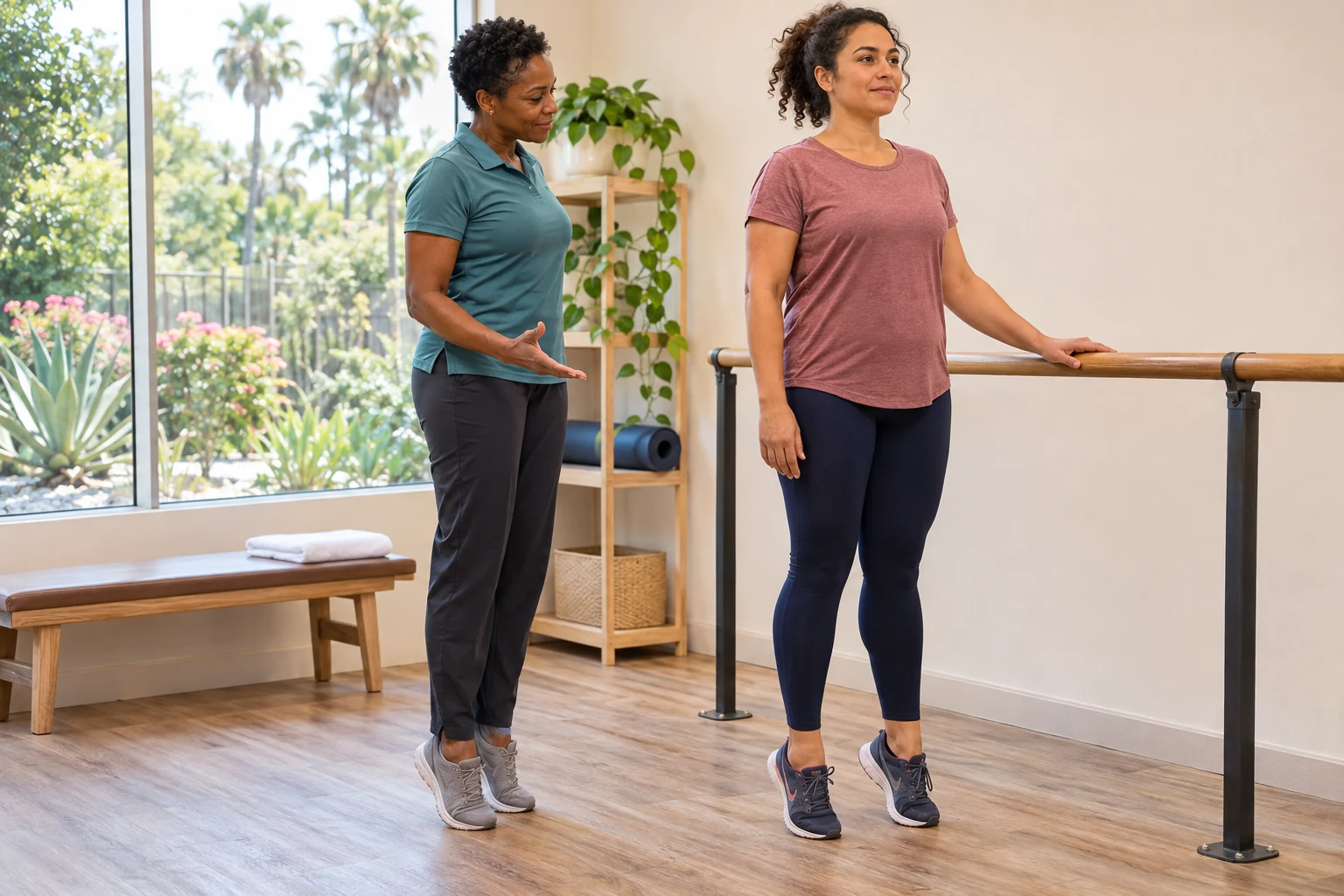
Returning to exercise after childbirth is safest when the pelvic floor and core have recovered enough to handle impact and lifting. Leaking, pelvic heaviness, pain, or core weakness are signs that pelvic floor therapy can help before you increase intensity. Our pelvic floor therapy in Tarzana, CA offers private, one-on-one postpartum care. Request a free, confidential consultation to plan a confident return to activity.
Many new mothers are eager to get back to walking, running, the gym, or their favorite class. At the same time, pregnancy and delivery place real demands on the pelvic floor and abdominal muscles, and those tissues need time and the right kind of training to recover. At Theracare Physical Therapy, our pelvic floor team helps postpartum patients in Tarzana and the surrounding area return to exercise with a plan that respects how the body heals.
This guide explains what happens to the pelvic floor during pregnancy and birth, general timelines for returning to activity, the warning signs worth paying attention to, and what postpartum pelvic floor therapy involves. If you already have symptoms, you can contact our team for a free, confidential consultation.
How Pregnancy and Childbirth Affect the Pelvic Floor
The pelvic floor is a group of muscles at the base of the pelvis that supports the bladder, bowel, and uterus, helps control continence, and works with the deep abdominal muscles and diaphragm to stabilize the core. During pregnancy, these muscles carry increasing load for months. Vaginal delivery can stretch or tear the tissues, and a C-section involves surgery through the abdominal wall. Either way, the pelvic floor and core often need guided rehabilitation, which is the focus of our pelvic floor therapy program.
After birth, many women notice changes such as weaker core control, leaking with coughing or lifting, a sense of pressure, or discomfort that was not there before. These symptoms are common, but common does not mean they have to be permanent. A pelvic floor physical therapist can assess what is happening and build a plan, much like the evaluation process described on our physical therapy page.
When Can You Start Exercising After Giving Birth?
There is no single date that applies to everyone. Recovery depends on your delivery, any complications, and how your body is healing. Always follow the guidance of your physician or midwife. General recovery stages often look like this, and our pelvic floor therapists can personalize each one:
- First two weeks: Focus on rest and recovery. Short walks, deep breathing, and gentle mobility are usually reasonable. Avoid lifting anything heavier than your baby.
- Weeks two to six: Gradually increase walking distance and pace. Gentle core and pelvic floor work may be appropriate if it does not increase pressure in the abdomen. Avoid sit-ups, crunches, and high-impact exercise.
- After about six weeks: Many women can begin more structured exercise once their postpartum checkup confirms healing. This is an ideal time for a pelvic floor therapy evaluation.
- Around 12 weeks and beyond: Running, jumping, and high-intensity training are often reintroduced around this time for many women, once core and pelvic floor strength have been rebuilt and you can walk briskly without pain, heaviness, or leaking.
Recovery is often more gradual after a C-section, a severe perineal tear, or other postpartum complications. In these cases, coordinated care between your physician and a pelvic floor therapist is especially valuable. You can learn more about recovery after surgery on our post-surgical rehabilitation page.
Signs You Should Consider Pelvic Floor Therapy
Pay attention to how your body responds as you increase activity. Consider scheduling a visit for pelvic floor therapy in Tarzana if you notice:
- Leaking urine when you cough, sneeze, laugh, lift, run, or jump
- Bowel leakage or difficulty controlling gas
- A feeling of heaviness, pressure, or bulging in the vagina, which may relate to pelvic organ prolapse symptoms
- Pelvic, tailbone, or hip pain that continues after delivery
- Pain during intimacy
- Core weakness or discomfort that has not improved with general exercise
- Back or pelvic pain that flares with lifting, feeding, or carrying your baby
- Pain around a C-section scar or perineal scar
If any of these appear when you try to exercise, it usually means your body needs more targeted preparation, not that you need to stop moving altogether. Stop and check in with your provider if you have pain around an incision, heavy bleeding after six weeks, significant urine leakage, or a feeling of pressure or bulging. Our team can then help you return safely through postpartum pelvic floor therapy.
What Postpartum Pelvic Floor Therapy Involves
Pelvic floor therapy at Theracare takes place in a private treatment room, and each step of evaluation and treatment is explained before it happens. Our pelvic floor physical therapist, Beata, graduated from CSUN in 2014 and brings advanced training in Visceral Manipulation, Craniosacral Therapy, and Acupressure on top of a traditional physical therapy foundation. She is also multilingual. You can meet her and the rest of our team on the About page.
A Private, Respectful Evaluation
Your first visit begins with a conversation about your pregnancy, delivery, symptoms, and exercise goals. Your therapist then assesses posture, breathing, core function, and pelvic floor strength and coordination to confirm the right approach. Nothing is done without your understanding and agreement, consistent with the care standards described on our pelvic floor therapy page.
A Plan Built Around Your Goals
Treatment plans are built gradually and reassessed regularly, as outlined on our pelvic floor therapy service page. Depending on your evaluation, your plan may include:
- Hands-on techniques: To ease tension, improve tissue mobility, and reduce pain, delivered by an experienced pelvic floor therapist
- Targeted exercise: Progressive pelvic floor and deep core training that carries over into lifting, running, and gym work
- Breathing and relaxation strategies: To coordinate the diaphragm, abdominals, and pelvic floor, and to manage pressure during exertion
- Patient education: Practical guidance on lifting your baby, feeding positions, and pacing your return to exercise
- General physical therapy techniques: When symptoms relate to a broader issue, such as low back pain, which is covered in our article on back pain that returns after sitting
Why Kegels Alone Are Not Always Enough
Many new mothers are told to do Kegel exercises and assume that will solve everything. Pelvic floor strengthening can help, but symptoms do not always come from weakness. Some women have pelvic floor muscles that are too tense, poorly coordinated, or not timing well with breathing and the abdominal muscles. In these cases, adding more squeezing can make pain or pressure worse. A pelvic floor evaluation clarifies what your muscles need, whether that is strength, relaxation, coordination, or a combination, and shapes the exercises in your postpartum recovery plan.
The deep abdominal muscles also play an important role. Pregnancy stretches the abdominal wall, and rebuilding control through breathing, posture, and progressive core training helps the whole system manage pressure during lifting and exercise. This is why our plans connect pelvic floor work with broader strength training, much like the progressive approach used across our physical therapy services.
Building Back to Running, Lifting, and Classes
Returning to exercise works best as a progression rather than a single decision. Your therapist will help you build from walking and foundational strength to more demanding activity, checking that your body handles each stage without leaking, heaviness, or pain. For many patients, that means progressing through bodyweight strength, light resistance, low-impact cardio, and then running or jumping. Active patients with sport-specific goals can continue their progress through our sports rehabilitation program.
Recovery support can also help. Cryotherapy and red light therapy are available at our clinic and are used between sessions to help reduce inflammation and support healing when appropriate. Your therapist will explain whether these options fit your plan.
Postpartum Recovery Is About More Than the Pelvic Floor
Caring for a newborn is physically demanding. Repeated lifting, carrying a car seat, and long periods of feeding can strain the back, neck, shoulders, wrists, and hands. Some new parents develop wrist and thumb pain from repetitive lifting, which our occupational therapy team can help address. Others notice knee discomfort as they return to stairs and squatting, a topic covered in our guide to knee pain on stairs. Our full range of physical therapy services allows us to support your whole recovery.
Why Choose Theracare for Pelvic Floor Therapy?
Since 2017, Theracare Physical Therapy has helped more than 1,000 patients and reports a 95% patient satisfaction rate. Our approach is personalized, evidence-based, and focused on restoring function, with patient education and self-management tools built into every plan. Pelvic floor therapy is offered at our Tarzana clinic in a private, welcoming setting.
Our Tarzana clinic is located at 18607 Ventura Blvd, Suite 106, and is convenient for patients from Encino, Reseda, Woodland Hills, and Sherman Oaks. We also have clinics in Newhall and Granada Hills, which you can find on our locations page. Insurance coverage varies, and our team can verify your benefits before your first visit.
Return to Exercise With Confidence
You do not need to choose between staying active and protecting your recovery. With the right preparation, most women can return to the exercise they enjoy. If you are noticing leaking, heaviness, pain, or core weakness, a trusted pelvic floor evaluation is the best place to start. Call (818) 975-8203 or request a free, confidential consultation with our pelvic floor therapy team in Tarzana today.